LEAVE A COMMENT
December 31, 2013.
This blog is now closed. After three years and 311 posts, I have decided to end this blog. I have enjoyed watching the films, reviewing them, and interacting with global readers.
If you are interested in contacting me, you can do so by commenting on any of the posts. The blog will remain live on the web.
Thank you to all the readers for your comments, ideas, and thoughts. They were helpful, stimulating, and enriching. This is Alene, signing off.
August 2, 2013
World War Z (3D - 2013)
Iron Man 3 (2013)
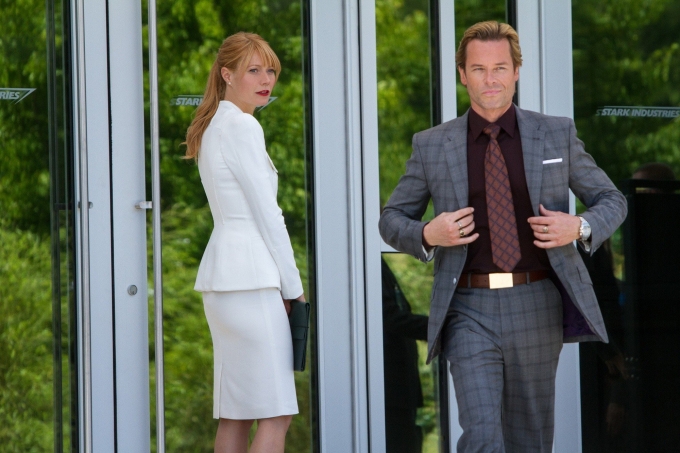
When it's over, "You know who I am," Tony Stark says. The symbolic quote is Tony's search for himself and his conclusion of who he is. I like this third installment, because it dares Tony to question his actions, and that is character growth I did not see in the previous two films. As an audience, we have watched him grow from an insensitive businessman to a man set on protecting mankind, even if it means blowing his ego to mega proportions. In Iron Man 3, we see Tony (Robert Downey Jr.) vulnerable and changed, and much of that has to do with his love for Pepper Potts (Gwyneth Paltrow). In order to save Pepper, Tony must defeat a madman who uses genetic alterations to terrorize humanity. Audiences will finally see Potts in action, as the film gives Paltrow some solid screen time. Guy Pierce and Ben Kingsley take the roles of bad guys, but Kingsley's character is not who he seems, which makes for some good humor. There is plenty of action and destruction, which is no surprise considering there are dozens of Iron Mans fighting dozens of genetically altered baddies. This third installment dares to please as several surprise plot twists make it intelligent as well as entertaining.
Anna Karenina (2012)
When it’s over, life is a stage, a performance done in scenes and acts. This is Director Joe Wright’s interpretation of Leo Tolstoy’s tragic story of love and forgiveness. Kiera Knightly takes the leading role as Anna, a woman married to a Russian aristocrat (Jude Law), who gives up position for true love for Count Vronsky (Aaron Taylor-Johnson), and pays the price for it. I have seen many versions of this classic tale, and none I really liked. However, Wright’s version is the most memorable, because of its palette of wondrous colors. I love the art direction. It is a spectacle of lavish costumes and opulent décor. No words are necessary to describe each character, because their clothes do the talking for them. Whether the clothes have a high collar or is draping down the shoulders, the clothing is a commentary of who they are and says something significant about their personalities. The acting is good by all, in particular, Law, who captures the coldness of Alexis Karenin perfectly, while still allowing a sliver of humanity to peek through the stoic demeanor. Still, despite the A-list actors, I cannot get into the minds of the characters. I cannot connect with them, because they are so strong willed, like iron, like the steam train that is so symbolic throughout the film. Although Anna’s strength falters at the end, her actions can be considered defiant, and there is strength in that also, which never allows the viewer to completely engage in the pain she suffers. The scenes show her emotional and physical collapse, but they do not pull me in. There is something lacking, perhaps realism (because the film is a stage - literally), which makes me feel very detached from the characters. As tragic as the story is, I did not feel any desire to mourn the losses in the name of love.
July 7, 2013
The Purge (2013)
When it’s over, a very interesting concept that is handled poorly. The year is 2022. The Purge happens once a year for 12 hours, when every criminal act becomes legal, including murder. The goal is to allow members of society to act out their aggression without consequences, purging their rage and anger. James Sandin (Ethan Hawke) and his family are prepared for the night with a state-of-the-art security system, but their safety is jeopardized when James’s son (Max Burkholder) disarms the house to help a stranger, who is running from a group of masked purgers. There are seven perspectives on The Purge, depicted by the four family members, the stranger, the leader of the masked purgers, and you – the viewer. The film addresses a lot of morality issues, where viewers cannot help, but ask themselves what is right and wrong, while criticizing the foolish and questionable actions each character embarks. Even more worthy of discussion is the post-purge effects on individuals and a community. How will you see your neighbor, or friend, or colleague after The Purge? Director/Writer James DeMonaco’s intent to scare the viewer is plausible, and some creepy scenes reinforce this aspect, but what starts out as a promising thriller turns into a stereotypical film about home invasion, a lesser version of Panic Room (2002). The difference between the two films is that Panic Room uses intellect whereas The Purge uses guns. The main problem is believability – in the script and in the characters. The dialogue is dry, and the words do not reinforce character development. The family characters are boring and quite stupid, as their decisions go against common sense in the simplest manner. Hawke and Lena Heady (wife, Mary Sandin) do their best to work with the material they have, but it is slim pickings for them. I think Purge would benefit from some originality in its storytelling. Perhaps, make the Sandin residence appear as a house on the outside, but a fortress on the inside with trap doors and secret hideaways that will make the invaders wish they had left the Sandins alone. This is not too far-fetched since the family is wealthy. On the note of wealth, I have to wonder why the family did not go on vacation during The Purge. They certainly have the money, but I get it – if they did, there would be no film. So, why not make the Sandin family poor folks, without money to travel or a fancy security system, who are simply good at hiding, but get caught!
Monsters University (2013)
When it’s over, so this is how Monsters become Scarers. Disney’s prequel to Monsters Inc (2001) has Mike (Billy Crystal) and Sulley (John Goodman) meeting at Monsters University, where they are competitors and not the best of friends. The film has all the elements of classic college comedy films – the fraternities, the rivalry, the friendships. And most important, the film touches on the fears and aspirations of what the future holds, something all viewers can identify with regardless of age, monster or not. There are plenty of laughs to satisfy the young and old, mostly taking place in the Scare Games scenes. The Scare Games is a competition between various fraternities and sororities to determine which team is the scariest. Two scenes in particular are: (1) the Toxicity Challenge, where potential Scarers have to race through a dark tunnel and avoid being stung by urchin-like balls, just like monsters have to avoid “toxic” toys and clothes in the children’s rooms; and (2) Hide and Scare, when the participants have to hide in a house from security, in the same way a Scarer has to hide from children's parents. As I am watching this film, I am wondering, Where do the writers get these outrageously clever ideas? With three creative minds (Dan Scanlon, Daniel Gerson, and Robert L. Baird), the outcome is funny, smart, and meaningful. Monsters University is a monster treat.
Subscribe to:
Posts (Atom)